
Planning an interior painting project involves more than picking a color and setting a date. What happens to your walls before painting begins? Which finish works best for each room? And how can you keep the work from disrupting your home or business?
These details shape the final result. For homeowners or businesses, professional interior painting in Golden can refresh living spaces and help worn walls look their best. A well-planned project can improve the appearance of the space while keeping interruptions manageable.
Here is what to expect from the first inspection to the final walkthrough.
Preparation: What Happens Before the First Coat?
Preparation often takes more time than property owners expect. Yet it plays a major role in how evenly the paint applies and how smooth the finished walls look.
● Inspecting Walls, Ceilings, and Trim
The project usually begins with an inspection of the areas to be painted. Professional painters check for peeling paint, cracks, dents, stains, loose caulk, and visible patches. Ceilings, baseboards, door frames, and window trim also need attention.
This inspection helps identify work that should happen before painting starts. For example, a small crack may need filling, while a damaged section of drywall may require a more thorough repair. Finding these issues early makes it easier to plan the work and provide a realistic estimate.
● Repairing and Preparing Surfaces
Once the scope is clear, the preparation work begins. Depending on the condition of the surfaces, this may involve cleaning walls, sanding rough areas, filling small holes, repairing drywall, and matching existing wall texture.
If you are also looking for “drywall repair near me”, it helps to choose a contractor who can address damaged surfaces as part of the overall painting project. Otherwise, repaired spots may remain noticeable after the new paint dries. Precision Painting and Finishing can discuss the condition of your walls and the work needed before painting begins.
After repairs, the painter prepares the surfaces for paint. Primer may be needed on bare drywall, patched areas, stains, or surfaces that require better adhesion. The right preparation depends on the existing finish and the paint being applied.
● Protecting Your Property
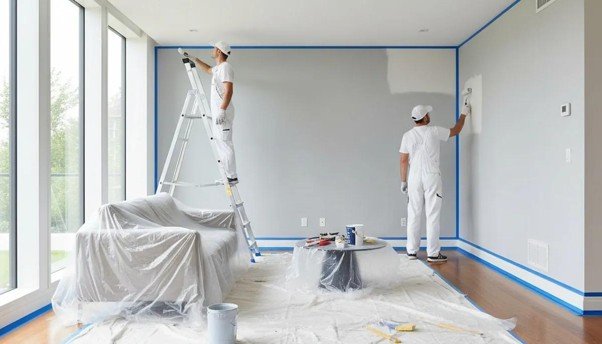
Before painting begins, floors, furniture, fixtures, and nearby surfaces need suitable protection. Furniture may be moved away from the walls or covered, and masking materials may be applied around trim and other areas that should not receive paint.
A professional crew also establishes clear work areas and access routes. This is especially important in occupied homes, offices, and retail spaces.
Finishes: How Do You Choose the Right Paint?
Once the surfaces are ready, the next step is choosing the paint color and finish. Color affects the mood of a room, while the finish influences how the walls look under light and how easily they can be cleaned.
Here are some common options:
- Flat or matte: Has little shine and can help reduce the appearance of minor wall imperfections. It may be suitable for ceilings and some low-traffic rooms.
- Eggshell: Offers a soft, low sheen that works well in many living rooms, bedrooms, and other everyday spaces.
- Satin: Has a smoother sheen and is often chosen for areas that need more frequent cleaning, such as busy hallways.
- Semi-gloss: Creates a more reflective surface and is commonly used on trim, doors, and other features that benefit from a washable finish.
The best option depends on the room, the wall condition, and how the space is used. A busy office corridor may need a different finish from a guest bedroom. Kitchens and bathrooms may also require products suited to their moisture and cleaning demands.
Before the work begins, discuss the color, sheen, and product selection with your painter. Looking at samples in the actual room can help because natural light, overhead lighting, and surrounding colors can change how a shade appears.
Project Planning: How Do You Keep the Work on Track?
A good painting plan sets expectations before the crew arrives. It should explain what will be painted, what preparation is included, how the work will be scheduled, and what you need to do before the start date.
● Confirm the Scope and Timeline
Start by listing the rooms and surfaces included in the project. Will the work cover walls only, or will it also include ceilings, doors, and trim? Are drywall repairs needed? Are you changing from a dark color to a lighter one?
These details can affect the materials, preparation time, and number of coats required. Your estimate should clearly describe the agreed scope so you know what to expect.
● Plan Around Daily Activities
For homes, painting can often be organized one room at a time. This may allow you to continue using other parts of the house while work progresses.
Commercial properties need a different approach. An office may need painting outside regular business hours, while a shop may require work to be scheduled around customer access. Discuss these needs in advance so the schedule accounts for employees, visitors, tenants, or other occupants.
● Understand Drying Time and Access
Paint needs time to dry between coats, and some products take longer to cure fully. Drying time depends on the product, temperature, humidity, ventilation, and surface conditions.
Your painter can explain when each area is expected to be ready for use. Avoid planning furniture moves or reopening busy spaces based only on how dry the paint feels to the touch.
Painting and Finishing: What Happens After Preparation?
Once the walls are repaired and prepared, the next step in interior painting in Golden is applying primer where needed and choosing the right approach for an even, lasting finish. The painter then applies the required coats of paint, paying close attention to edges, corners, trim, and areas around fixtures.
Between coats, the team allows adequate drying time and checks that the paint covers the surface evenly. After the final coat, they inspect the walls for missed spots, visible roller marks, uneven coverage, or accidental paint marks on nearby surfaces.
To complete the project, the team removes protective coverings, tidies the work area, and walks through the finished spaces with the property owner or manager. Any areas needing touch-ups can be addressed before the job is complete.
Make Every Space Feel Its Best
Scuffed walls, uneven patches, and faded paint can make an otherwise attractive space feel tired. A professional repaint can help bring the space back to life. Precision Painting and Finishing helps homeowners and commercial property owners improve their interiors through careful preparation, drywall repair, texture matching, and quality finishing work.
We consider the condition of your walls and how each space is used before planning the project. The result is a painting process built around your property’s needs, from the first inspection to the final walkthrough.
Call (303) 619-8337 or drop a mail at Info@ChoosePrecisionPainting.com to get started.
FAQs
- What Affects the Cost of Interior Painting in Golden?
Interior painting costs depend on project size, wall condition, ceiling height, paint selection, and repair needs. A detailed estimate helps clarify expenses, included services, and timelines.
- How do professional painters prepare walls before painting?
Painters inspect surfaces, clean walls, sand rough spots, repair cracks and holes, match textures, and apply primer where needed for a smooth finish.
- How do I choose the right paint finish for my home?
Consider the room’s use, lighting, wall condition, and cleaning needs. Matte, eggshell, satin, and semi-gloss finishes each offer different benefits.
- How long does an interior painting project take in Golden?
The timeline depends on the room size, wall condition, required repairs, number of coats, and drying time. Precision Painting and Finishing can provide a schedule based on your specific project.
- How can businesses plan interior painting without major disruption?
Businesses can coordinate painting around operating hours, arrange work in phases, and plan access with their contractor to limit interruptions for employees and customers.